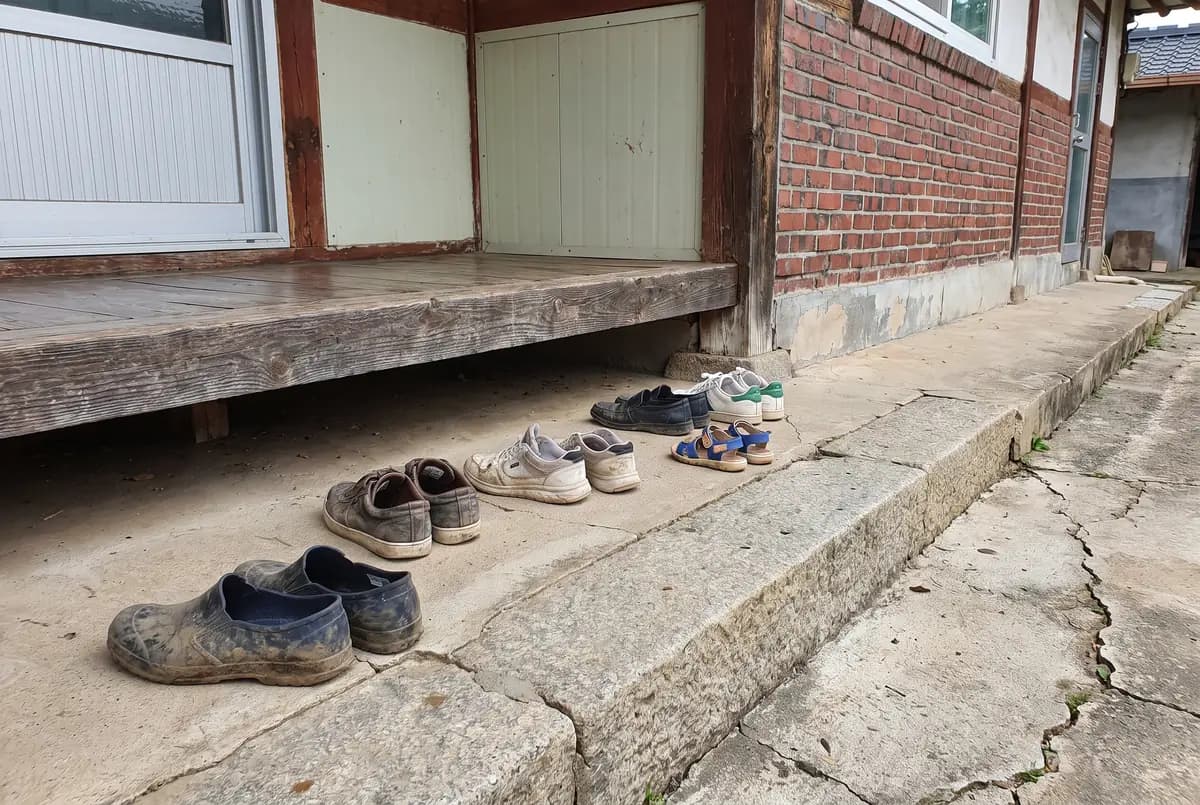
You could tell who was home by looking at the shoes.
They sat on a broad flat stone where the yard met the house — my father's black rubber shoes, my mother's white ones, a pair or two of small sneakers alongside. Toes pointed out toward the yard meant someone was on their way out. Toes turned in meant someone had just come back and had not thought about it.
In an old Korean house the floor sits above the ground — a wooden platform you step up onto from the yard, called 마루, maru. The stone set between the two — one step, sometimes two — is 섬돌, seomdol. Shoes come off here and you are home. Shoes go on and you are out in the world.
On the days when something had happened, you could hear it. Feet shoved into shoes on that stone, louder than usual.
Apartments have no seomdol. The entryway does the same work.
Whoever came in late last night has left their shoes where they kicked them off.